

Manufacturing Companies: Tax Credits and Recent Bonus Depreciation Updates
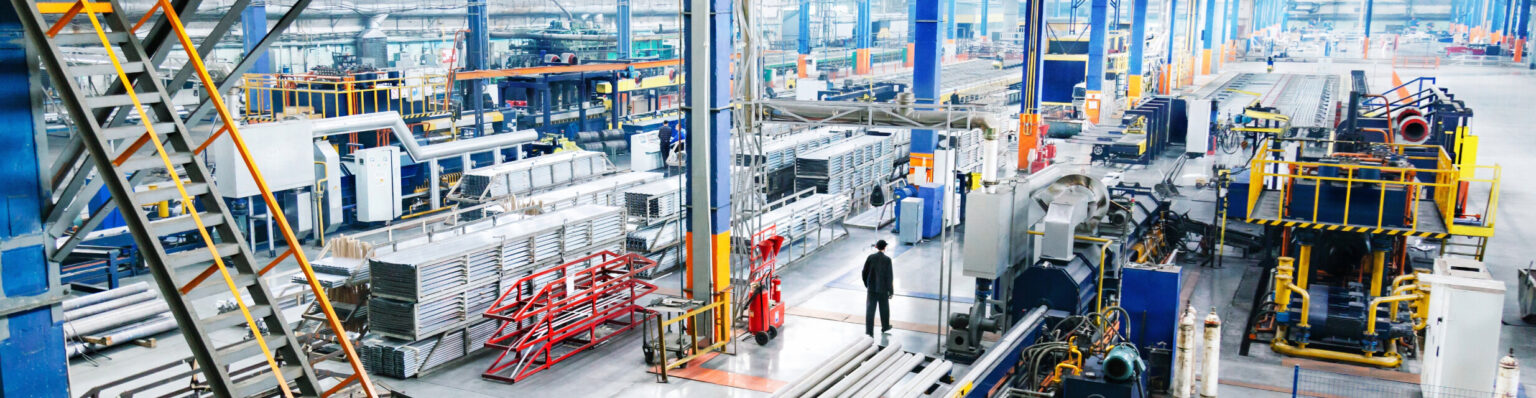
Tax credits and incentives provide a valuable opportunity for manufacturers to reduce their tax liability and reinvest the savings back into their operations. The federal government offers multiple tax credits and incentives specifically designed to support manufacturers. By taking full advantage of available opportunities, manufacturers can enhance their competitive edge while strengthening their bottom line. In a challenging economic environment, tax credits are not just a benefit; they are a strategic tool for long-term success.
Advanced Energy Project (AEP) Credit
The Advanced Energy Project (AEP) credit, introduced under the Inflation Reduction Act, allows manufacturers who invest in qualifying advanced energy projects to apply for a tax credit through the United States Department of Energy. Qualifying projects include:
- Expanding or establishing a manufacturing facility to produce or recycle specified advanced energy properties.
- Expanding or establishing an industrial facility to process, refine or recycle critical materials.
- Installing technology in a manufacturing facility to reduce greenhouse emissions by at least 20%.
Projects that do not meet the prevailing wage and apprenticeship requirements qualify for a 6% credit, while those that do meet these requirements can receive a credit of up to 30% of qualified investment costs.
Advanced Manufacturing Investment (AMI) Credit
The Advanced Manufacturing Investment (AMI) credit, established under the 2022 Creating Helpful Incentives to Produce Semiconductors (CHIPS) Act, offers a tax credit on qualified investments for semiconductor manufacturers. Prior to H.R. 1, the One Big Beautiful Bill Act (OBBA), the credit was 25%, but effective July 4, 2025, the tax credit increased to 35% for qualified property placed in service after December 31, 2025. Qualified investments include new buildings, facilities and tangible property that is subject to depreciation or amortization and must be integral to the operation of an advanced manufacturing facility. To be eligible for the AMI credit, construction of qualified property must begin before January 1, 2027. Eligible manufacturers can elect to treat the credit as direct pay if they do not have sufficient tax liability to utilize the credit, making this a refundable tax credit.
Advanced Manufacturing Production (AMP) Credit
The Advanced Manufacturing Production (AMP) credit, known as the Section 45X tax credit from the Inflation Reduction Act, is for manufacturers who produce eligible components within the U.S. or its territories as part of a trade or business. The credit is calculated using a specific credit rate based on the eligible components that a manufacturer produces and sells during the taxable year for which the credit is claimed. Eligible components include:
- Applicable critical minerals
- Electrode active materials
- Inverters
- Solar energy components
- Qualifying battery components
- Wind energy components, such as offshore wind vessels (Under OBBBA, this component will terminate for items produced and sold in 2028 and beyond.)
Manufacturers can claim the full credit amount for eligible components sold between 2023 and 2029. Due to the recently passed OBBBA, critical minerals are no longer exempt and will phase out beginning in 2030 as follows: 100% in 2030, 75% in 2031, 50% in 2032 and 25% in 2033. Additionally, there is a foreign entity exclusion for components made with assistance from prohibited foreign entities for components produced after December 31, 2025.
Research and Development (R&D) Tax Credit
The Research and Development (R&D) Tax credit rewards manufacturing companies that are pioneering modernization in our society. The credit provides a tax break for certain Qualified Research Expenses (QREs) incurred from investing in Qualified Research Activities (QRAs), including wages, supplies and qualified contract expenses. Manufacturing companies, regardless of size, are eligible for this credit if their investment initiatives translate into qualifying R&D activities. If a company is eligible, the dollar-for-dollar federal R&D tax credit can be claimed yearly. To learn more about qualifying activities for manufacturing companies, download our R&D Credit Case Study for the Manufacturing Industry.
Work Opportunity Tax Credit (WOTC)
The Work Opportunity Tax Credit (WOTC) is a federal income tax credit available to manufacturing companies of any size that hire and pay wages to individuals from specific target groups who face employment barriers. Targeted groups eligible include former felons, qualified veterans, individuals receiving government assistance, vocational rehabilitation referrals and long-term unemployed individuals. The credit is 40% of the first $6,000 of wages paid to qualified employees, resulting in a maximum available credit of $2,400 per hire. For certain targeted groups, such as disabled veterans, the credit can be as high as $9,600. Manufacturing companies that are eligible have until December 31, 2025, to claim this credit.
Bonus Depreciation
In addition to tax credits, manufacturers should be aware of the recent changes in bonus depreciation.
Bonus depreciation is a tax incentive that allows businesses to deduct the cost of eligible assets in the first year they are placed in service. The OBBBA has restored this incentive, making permanent 100% bonus depreciation for qualified personal property placed in service after January 19, 2025. Eligible assets include machinery and equipment, computers, vehicles and software used in the trade or business. Manufacturers can use bonus depreciation to reduce their tax burden and incentivize investment in necessary equipment and assets.
The OBBBA also provides a new elective 100% bonus depreciation deduction for qualified production property placed in service before January 1, 2031. Qualified production property would include any portion of nonresidential real property used as an integral part of qualified manufacturing, agricultural or chemical production or refining of a “qualified product” that results in a substantial transformation of the product. Excluded from qualified production property is nonresidential real property used for functions unrelated to manufacturing, production or refining of qualified products. Additional requirements apply to acquired property not previously used in qualified production activities. This applies to property placed in service after July 4, 2025, but before January 1, 2031, construction of which begins after January 19, 2025, but before January 1, 2029.
Tax credits and bonus depreciation can be powerful tools for manufacturers looking to reduce costs, invest in innovation and expand operations. Manufacturers should consult with a tax advisor to ensure they are maximizing their benefits while remaining compliant. If you have any questions regarding tax credits or bonus depreciation in the manufacturing industry, please reach out to our Brown Plus Tax Department.