

Lease Accounting: Ongoing Challenges for Construction Companies Under ASC 842
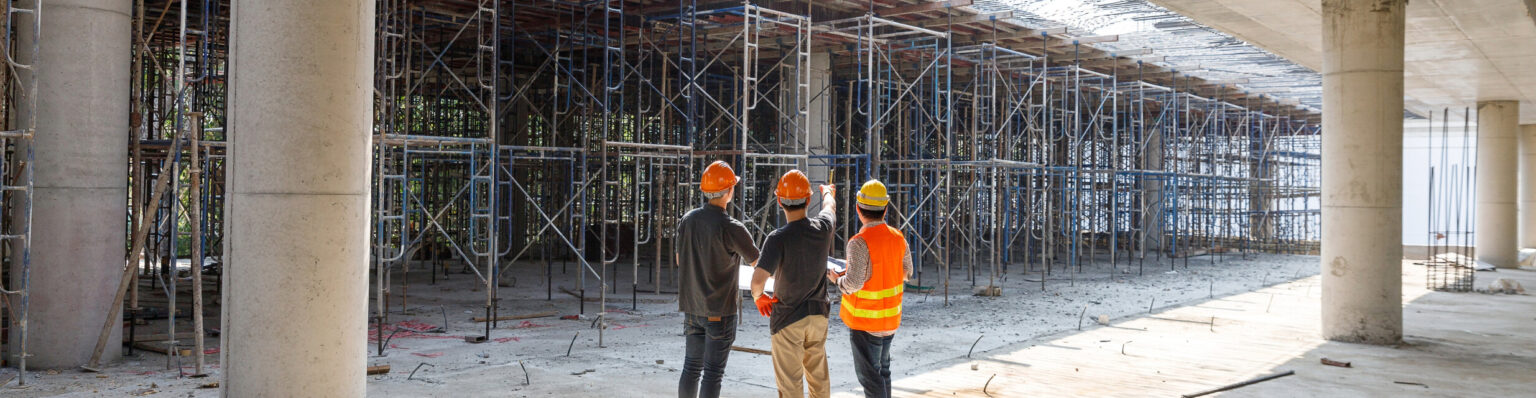
The lease accounting standard, known as Accounting Standard Codification (ASC) 842, took effect in 2022 and introduced significant changes for businesses across various industries. The construction industry was no exception. While overall guidance seems straightforward, applying the lease standard to the construction industry had its challenges, and companies still struggle with certain aspects, such as identifying embedded leases in subcontractor agreements and determining how leased equipment used on job sites should be accounted for in project costs.
What Does the Lease Accounting Standard Require?
Under ASC 842, companies must recognize all operating and finance leases on their balance sheets as both right-of-use (ROU) assets and lease liabilities:
- Operating vs. Finance Lease: There are five key criteria that must be assessed to determine whether or not a lease needs to be recorded as a finance or operating lease. If any of the following is true, then the lease should be recorded as a finance lease:
- A written bargain purchase option exists for the asset that the lessee is reasonably certain to exercise.
- Transfer of the ownership of the leased property from the lessor to the lessee will occur by the end of the lease agreement.
- The present value of the collective lease payments, as well as any guaranteed residual value, is equal to or substantially in excess of the leased assets fair market value.
- The lease term represents a major part of the economic life of the underlying asset.
- The leased asset is considered specialized, meaning there is no expectation of an alternative use of the asset when the lease agreement concludes.
- Right-of-Use (ROU) Assets: These are finance leases, capitalized by the lessee, and represent the lessee’s right to use an underlying asset for the lease term. Using the ROU asset label rather than capital asset, helps financial statement users distinguish between assets owned outright and those recognized due to lease agreements.
- Lease Liability: ASC 842 requires a short-term and long-term breakout of the total lease payments owed over the life of the lease.
The goal of the standard is to increase visibility and transparency into a lessee’s lease obligations and related assets.
Common Lease Accounting Challenges and Considerations
The following are considerations companies need to consider as they continue to uphold the ASC 842 standard:
- Leases outside the standard’s scope –Certain leases fall outside of the scope of ASC 842, including leases of intangible assets, biological assets, assets under construction and inventory. These leases should be accounted for under other applicable Generally Accepted AccountingPrinciples (GAAP).
- Embedded leases in contracts – Identifying embedded leases was noted by contractors as the most time-consuming aspect of adopting the lease standard. A contract may contain an embedded lease if it does not mention the word lease but conveys control of a specific, non-substitutable asset. Certain service contracts, subcontractor or supply arrangements may qualify as embedded leases and might be recorded as ROU assets and liabilities on a balance sheet.
- Understand what could increase the period of the lease –Lease terms must include extension or purchase options if they are reasonably certain to be exercised. If both parties have the option to terminate or renew, the lease may no longer be enforceable, and no lease liability or ROU asset is recognized.
- Impact on key financial decisions – The lease standard influences how financial health is assessed; debt is managed and future planning. Construction companies will have to consider whether they want to purchase certain assets outright that were historically leased under operating leases, as well as how the recognition of ROU assets and lease liabilities will affect bank covenants.
Complying with ASC 842 is essential for construction companies to maintain financial transparency and long-term success. If robust internal controls are not established already, companies should create a process to monitor and identify leases. Investing in lease accounting software can streamline compliance by automating the process, identifying embedded leases and reducing administrative burdens.
If you have any questions regarding lease accounting for construction companies, please reach out to a Brown Plus advisor.